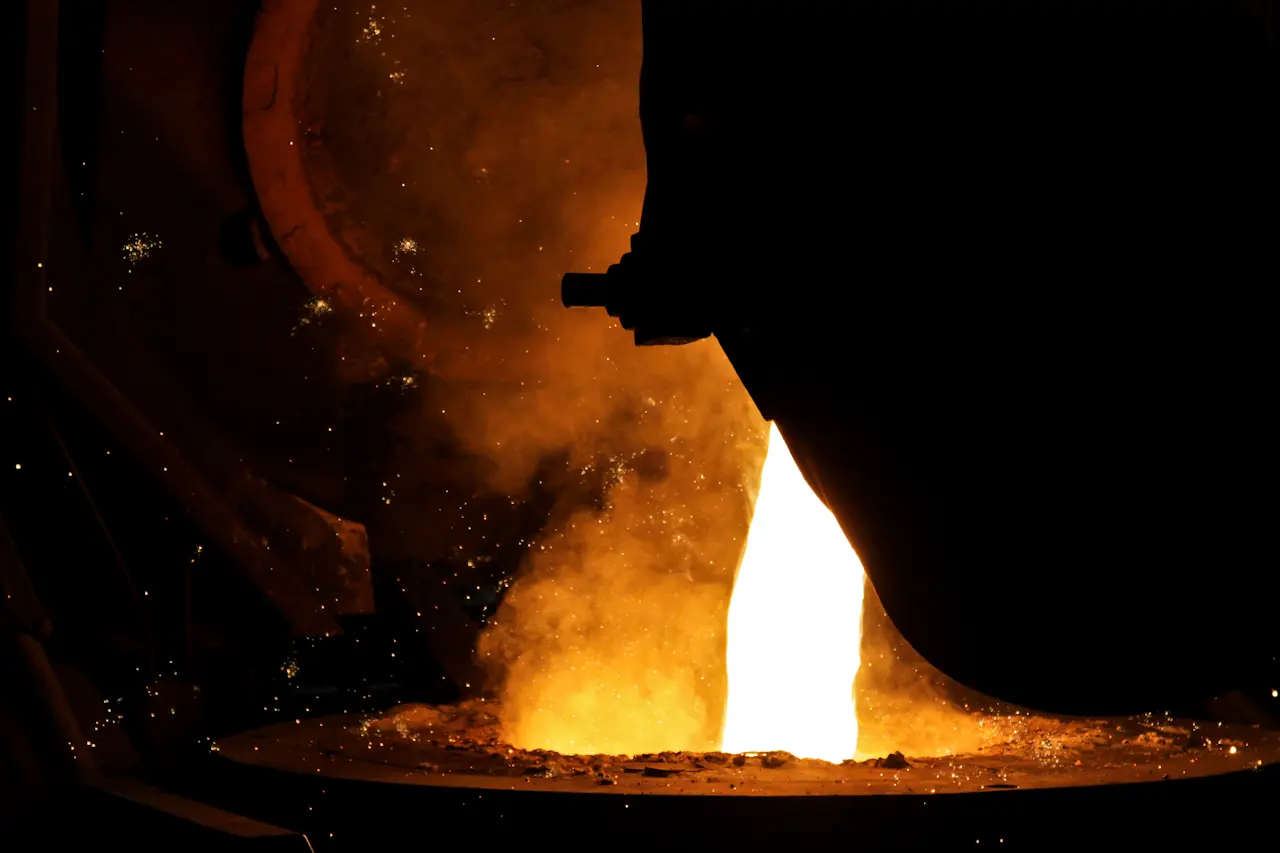
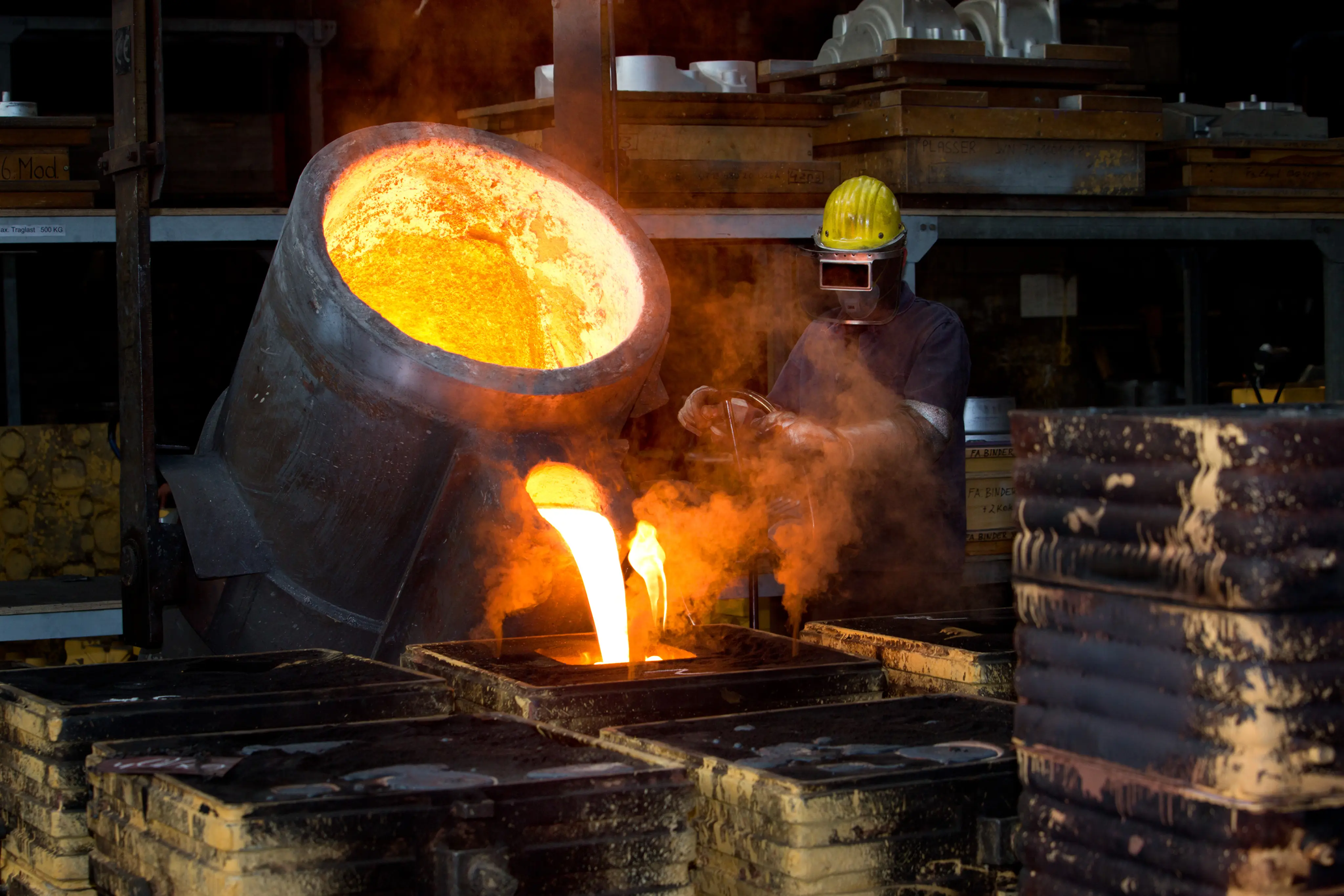
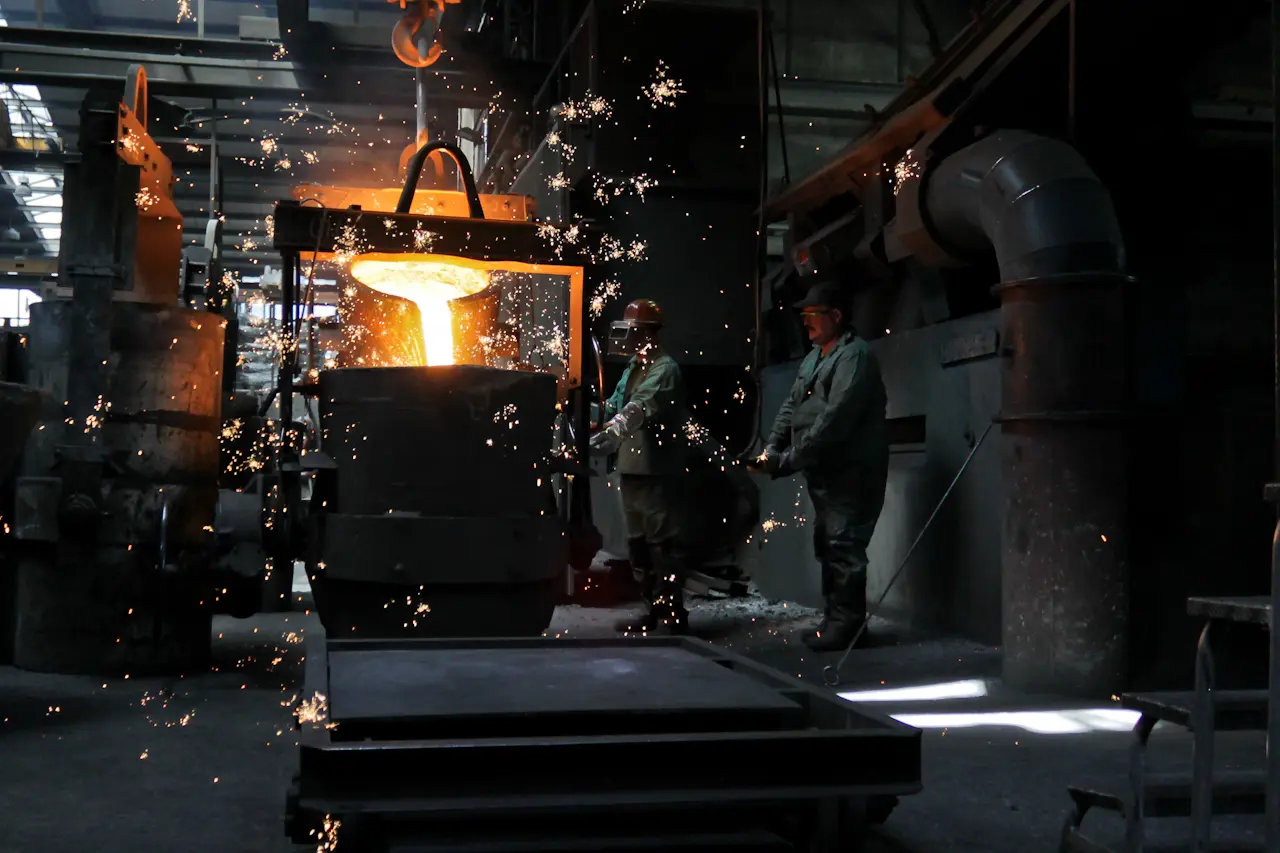
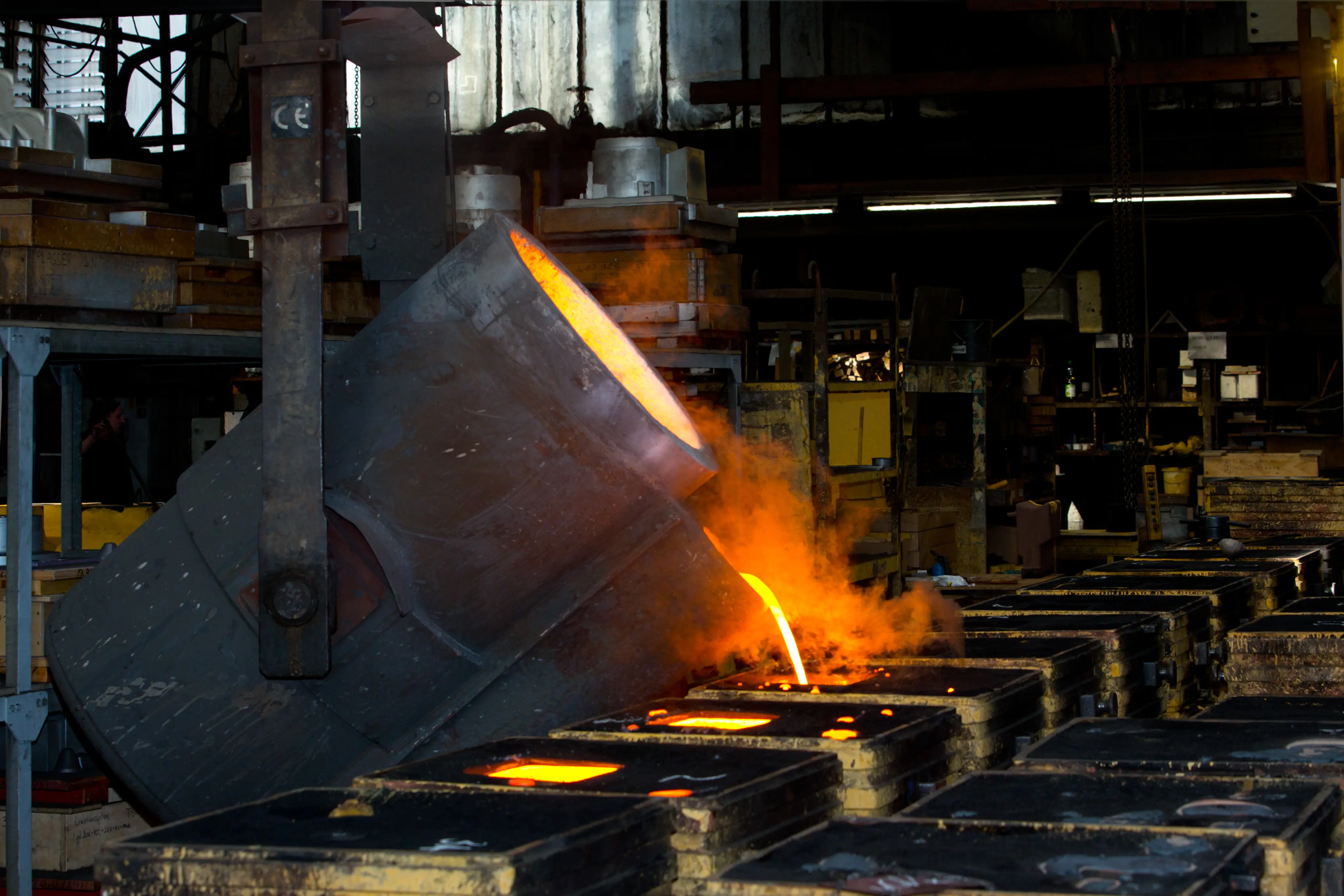
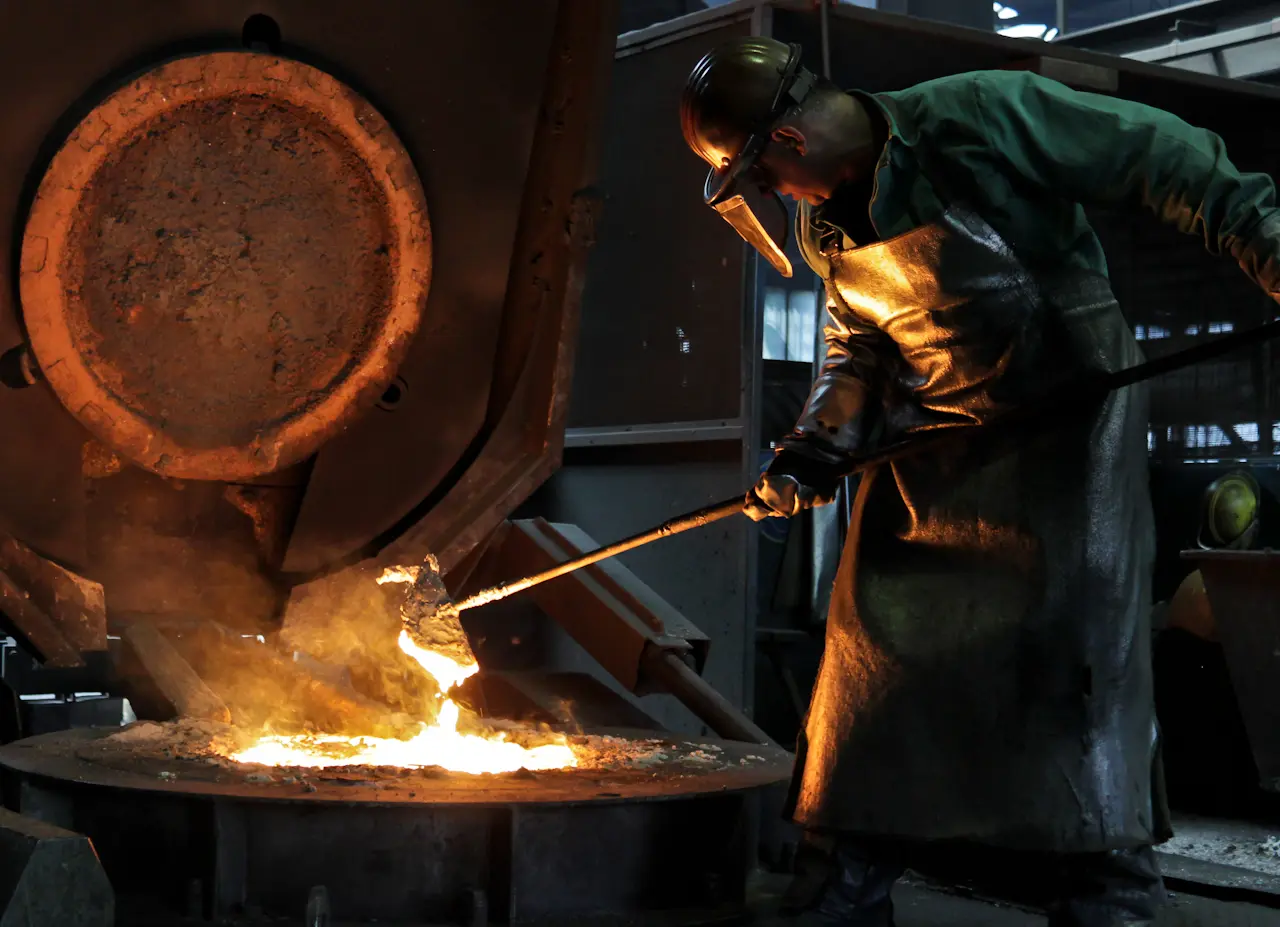
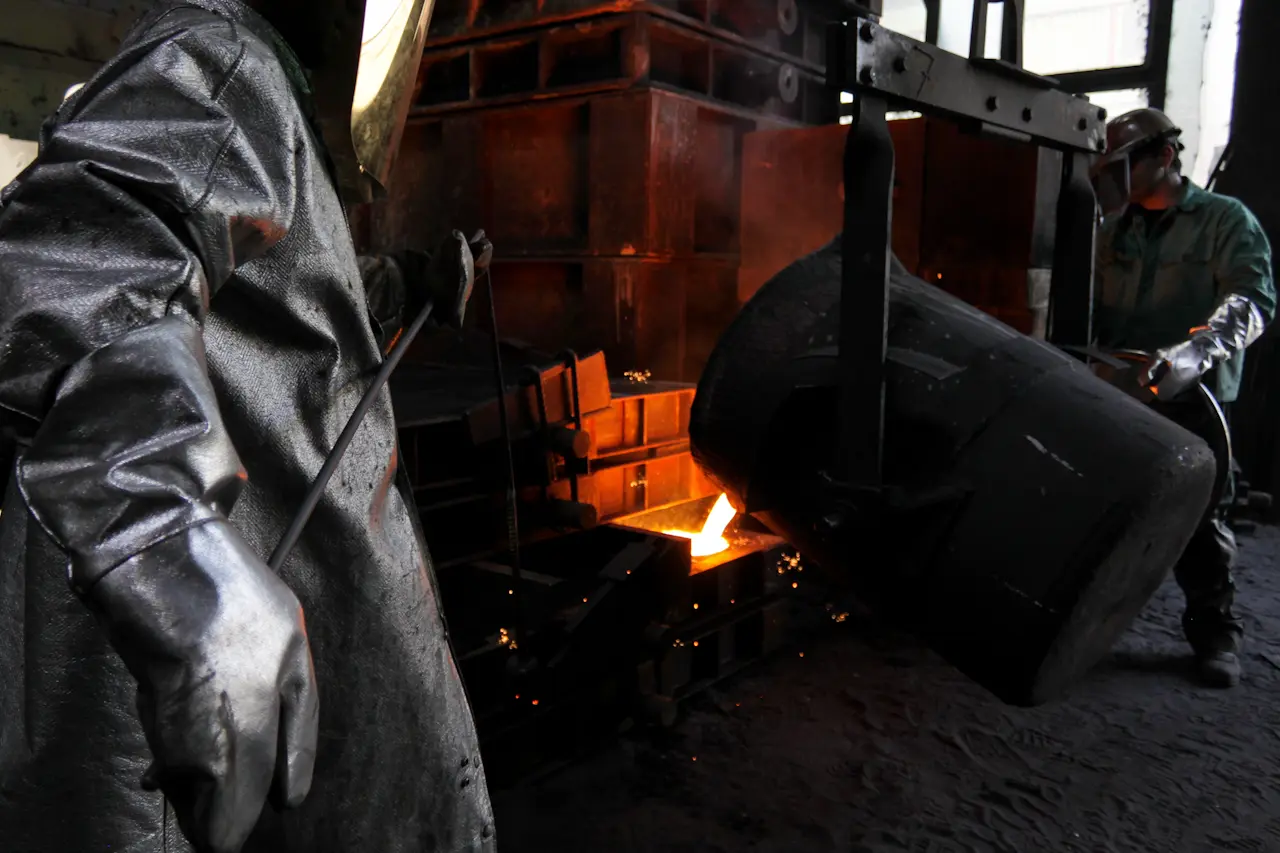
Our casting shop is equipped with two medium-frequency induction crucible furnaces, each with a capacity of 3 tons and a connected load of 2.5 MW. This allows the production of approximately 3,000 kg of liquid iron per hour. In 2024, the entire electronics and control system of the furnace installation were comprehensively modernized to the latest state of the art. Despite several weeks of downtime during the conversion, there were no limitations in customer deliveries – production continued without interruption thanks to careful planning and alternative capacities.
Material variety and standards
Cast iron is one of the most versatile and cost-efficient construction materials in metal casting. Depending on the microstructure, the material can be optimally adapted to very different technical requirements. The most common types are spheroidal graphite cast iron and flake graphite cast iron – two material groups that differ significantly in their properties and therefore each offer specific advantages for different fields of application.
Spheroidal graphite cast iron
Spheroidal graphite cast iron is a high-strength cast material in which the carbon is present in a nodular form. This combines the good castability of gray iron with high tensile strength, toughness and fatigue resistance. It is used wherever robust and durable components are required – for example in mechanical, automotive and plant engineering.
Standards for spheroidal graphite cast iron
EN 1563:2018
EN 1563:1997 (former)
ISO 1083:2004 (former)
DIN 1693-1 and 1693-2 (former)
Designation
Number
Table 1
Table 3
Table 1 and A.1
Table 3 and A.1
Designation
Number
EN-GJS-350-22-LT
5.3100
EN-JS1015
EN-JS1019
ISO 1083/JS/350-22-LT/S
ISO 1083/JS/350-22-LT/U
GGG-35.3
0.7033
EN-GJS-350-22-RT
5.3101
EN-JS1014
EN-JS1029
ISO 1083/JS/350-22-RT/S
ISO 1083/JS/350-22-RT/U
-
-
EN-GJS-350-22
5.3102
EN-JS1010
EN-JS1032
ISO 1083/JS/350-22/S
ISO 1083/JS/350-22/U
-
-
EN-GJS-400-18-LT
5.3103
EN-JS1025
EN-JS1049
ISO 1083/JS/400-18-LT/S
ISO 1083/JS/400-18-LT/U
GGG-40.3
0.7043
EN-GJS-400-18-RT
5.3104
EN-JS1024
EN-JS1059
ISO 1083/JS/400-18-RT/S
ISO 1083/JS/400-18-RT/U
-
-
EN-GJS-400-18
5.3105
EN-JS1020
EN-JS1062
ISO 1083/JS/400-18/S
ISO 1083/JS/400-18/U
-
-
EN-GJS-400-15
5.3106
EN-JS1030
EN-JS1072
ISO 1083/JS/400-15/S
ISO 1083/JS/400-15/U
GGG-40
0.7040
EN-GJS-450-18
5.3108
-
-
-
-
-
-
EN-GJS-450-10
5.3107
EN-JS1040
EN-JS1132
ISO 1083/JS/450-10/S
ISO 1083/JS/450-10/U
-
-
EN-GJS-500-14
5.3109
-
-
-
-
-
-
EN-GJS-500-7
5.3200
EN-JS1050
EN-JS1082
ISO 1083/JS/500-7/S
ISO 1083/JS/500-7/U
GGG-50
0.7050
EN-GJS-600-10
5.3110
-
-
-
-
-
-
EN-GJS-600-3
5.3201
EN-JS1060
EN-JS1092
ISO 1083/JS/600-3/S
ISO 1083/JS/600-3/U
GGG-60
0.7060
EN-GJS-700-2
5.3300
EN-JS1070
EN-JS1102
ISO 1083/JS/700-2/S
ISO 1083/JS/700-2/U
GGG-70
0.7070
EN-GJS-800-2
5.3301
EN-JS1080
EN-JS1112
ISO 1083/JS/800-2/S
ISO 1083/JS/800-2/U
GGG-80
0.7080
EN-GJS-900-2
5.3302
EN-JS1090
EN-JS1122
ISO 1083/JS/900-2/S
ISO 1083/JS/900-2/U
-
-
EN-GJS-350-22-LT (5.3100)
EN 1563:1997 (former)
Table 1: EN-JS1015, Table 3: EN-JS1019
ISO 1083:2004 (former)
Table 1 and A.1: ISO 1083/JS/350-22-LT/S
Table 3 and A.1: ISO 1083/JS/350-22-LT/U
DIN 1693-1 and 1693-2 (former)
Designation: GGG-35.3, Number: 0.7033
EN-GJS-350-22-RT (5.3101)
EN 1563:1997 (former)
Table 1: EN-JS1014, Table 3: EN-JS1029
ISO 1083:2004 (former)
Table 1 and A.1: ISO 1083/JS/350-22-RT/S
Table 3 and A.1: ISO 1083/JS/350-22-RT/U
DIN 1693-1 and 1693-2 (former)
Designation: -, Number: -
EN-GJS-350-22 (5.3102)
EN 1563:1997 (former)
Table 1: EN-JS1010, Table 3: EN-JS1032
ISO 1083:2004 (former)
Table 1 and A.1: ISO 1083/JS/350-22/S
Table 3 and A.1: ISO 1083/JS/350-22/U
DIN 1693-1 and 1693-2 (former)
Designation: -, Number: -
EN-GJS-400-18-LT (5.3103)
EN 1563:1997 (former)
Table 1: EN-JS1025, Table 3: EN-JS1049
ISO 1083:2004 (former)
Table 1 and A.1: ISO 1083/JS/400-18-LT/S
Table 3 and A.1: ISO 1083/JS/400-18-LT/U
DIN 1693-1 and 1693-2 (former)
Designation: GGG-40.3, Number: 0.7043
EN-GJS-400-18-RT (5.3104)
EN 1563:1997 (former)
Table 1: EN-JS1024, Table 3: EN-JS1059
ISO 1083:2004 (former)
Table 1 and A.1: ISO 1083/JS/400-18-RT/S
Table 3 and A.1: ISO 1083/JS/400-18-RT/U
DIN 1693-1 and 1693-2 (former)
Designation: -, Number: -
EN-GJS-400-18 (5.3105)
EN 1563:1997 (former)
Table 1: EN-JS1020, Table 3: EN-JS1062
ISO 1083:2004 (former)
Table 1 and A.1: ISO 1083/JS/400-18/S
Table 3 and A.1: ISO 1083/JS/400-18/U
DIN 1693-1 and 1693-2 (former)
Designation: -, Number: -
EN-GJS-400-15 (5.3106)
EN 1563:1997 (former)
Table 1: EN-JS1030, Table 3: EN-JS1072
ISO 1083:2004 (former)
Table 1 and A.1: ISO 1083/JS/400-15/S
Table 3 and A.1: ISO 1083/JS/400-15/U
DIN 1693-1 and 1693-2 (former)
Designation: GGG-40, Number: 0.7040
EN-GJS-450-18 (5.3108)
EN 1563:1997 (former)
Table 1: -, Table 3: -
ISO 1083:2004 (former)
Table 1 and A.1: -
Table 3 and A.1: -
DIN 1693-1 and 1693-2 (former)
Designation: -, Number: -
EN-GJS-450-10 (5.3107)
EN 1563:1997 (former)
Table 1: EN-JS1040, Table 3: EN-JS1132
ISO 1083:2004 (former)
Table 1 and A.1: ISO 1083/JS/450-10/S
Table 3 and A.1: ISO 1083/JS/450-10/U
DIN 1693-1 and 1693-2 (former)
Designation: -, Number: -
EN-GJS-500-14 (5.3109)
EN 1563:1997 (former)
Table 1: -, Table 3: -
ISO 1083:2004 (former)
Table 1 and A.1: -
Table 3 and A.1: -
DIN 1693-1 and 1693-2 (former)
Designation: -, Number: -
EN-GJS-500-7 (5.3200)
EN 1563:1997 (former)
Table 1: EN-JS1050, Table 3: EN-JS1082
ISO 1083:2004 (former)
Table 1 and A.1: ISO 1083/JS/500-7/S
Table 3 and A.1: ISO 1083/JS/500-7/U
DIN 1693-1 and 1693-2 (former)
Designation: GGG-50, Number: 0.7050
EN-GJS-600-10 (5.3110)
EN 1563:1997 (former)
Table 1: -, Table 3: -
ISO 1083:2004 (former)
Table 1 and A.1: -
Table 3 and A.1: -
DIN 1693-1 and 1693-2 (former)
Designation: -, Number: -
EN-GJS-600-3 (5.3201)
EN 1563:1997 (former)
Table 1: EN-JS1060, Table 3: EN-JS1092
ISO 1083:2004 (former)
Table 1 and A.1: ISO 1083/JS/600-3/S
Table 3 and A.1: ISO 1083/JS/600-3/U
DIN 1693-1 and 1693-2 (former)
Designation: GGG-60, Number: 0.7060
EN-GJS-700-2 (5.3300)
EN 1563:1997 (former)
Table 1: EN-JS1070, Table 3: EN-JS1102
ISO 1083:2004 (former)
Table 1 and A.1: ISO 1083/JS/700-2/S
Table 3 and A.1: ISO 1083/JS/700-2/U
DIN 1693-1 and 1693-2 (former)
Designation: GGG-70, Number: 0.7070
EN-GJS-800-2 (5.3301)
EN 1563:1997 (former)
Table 1: EN-JS1080, Table 3: EN-JS1112
ISO 1083:2004 (former)
Table 1 and A.1: ISO 1083/JS/800-2/S
Table 3 and A.1: ISO 1083/JS/800-2/U
DIN 1693-1 and 1693-2 (former)
Designation: GGG-80, Number: 0.7080
EN-GJS-900-2 (5.3302)
EN 1563:1997 (former)
Table 1: EN-JS1090, Table 3: EN-JS1122
ISO 1083:2004 (former)
Table 1 and A.1: ISO 1083/JS/900-2/S
Table 3 and A.1: ISO 1083/JS/900-2/U
DIN 1693-1 and 1693-2 (former)
Designation: -, Number: -
Flake graphite cast iron
Flake graphite cast iron is a proven design material in which the carbon is present in fine, lamellar graphite structures. This microstructure provides very good damping properties, high compressive strength and excellent thermal conductivity. It is ideal for components such as machine beds, engine blocks or housings where dimensional stability, vibration damping and cost efficiency are key.
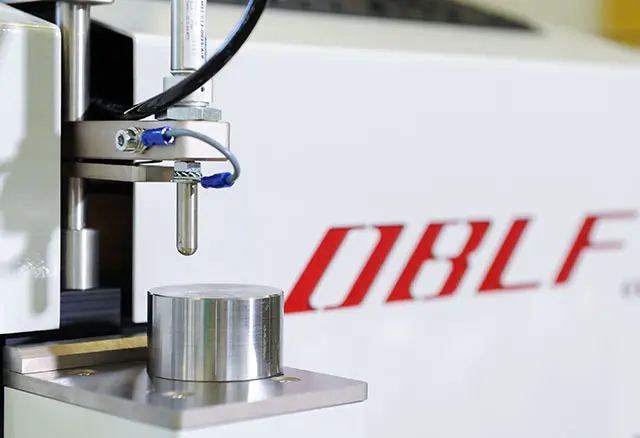
Precise temperature control, batch monitoring, and spectral analysis ensure a consistently high melt quality. After solidification and shake-out, the castings are prepared for further processing.
Clean Further Processing
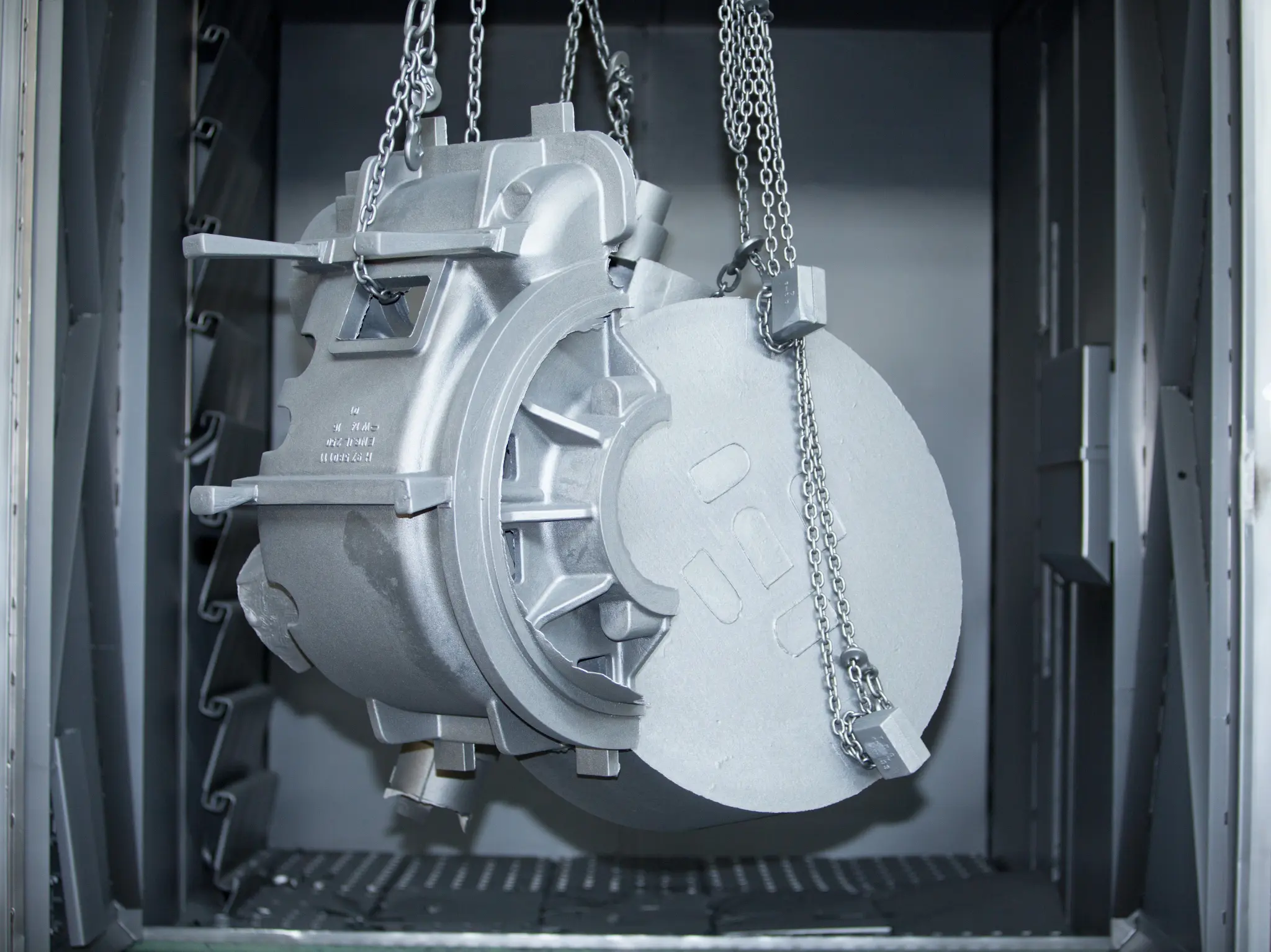
After solidification and shakeout, the castings are cleaned in the blasting unit. Sand residues, burrs, and adhesions are removed to create a clean surface for subsequent machining or coating processes.
Are you planning a new casting project or have questions about our services?
Our experts will be happy to advise you! Together, we’ll find the optimal solution — reliable, precise, and tailored to your needs — whether it’s a one-off production, series casting, or special project. Get in touch with us now and discover the right solution for your project! Contact us today!